BHATIA MAHAJAN
  • Home
  • About
  • History
    • Origins
    • India
    • Middle East
    • East Africa
    • Global
  • Religion
  • Culture
    • Rites & Rituals
  • People
  • Resources
  • Gallery
  • Contribute
Picture
BHATIA MAHAJAN

​
​         "Honouring Our Past, Inspiring Our Future" 
       
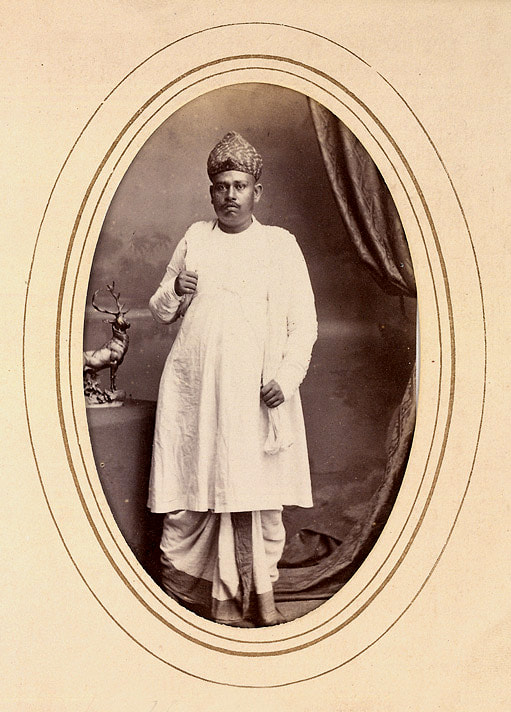
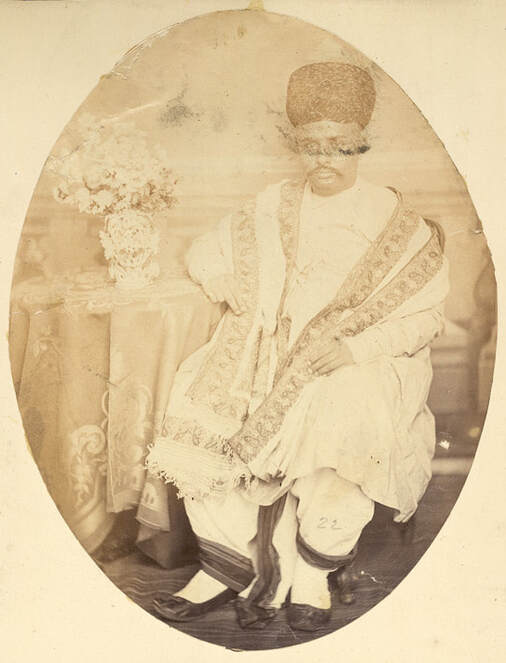
"The Bhattias are one of the very ancient, skillful, and important subdivisions of the Hindoo commercial castes, but from being a comparatively small caste, and more addicted to foreign than domestic commerce, they are not so well known to us in India as many castes of less importance, except in Bombay itself and in Guzerat, Cutch,
​ and Kattywar, where their red turbans, often with a peak in front, strike the stranger as differing from the ordinary head-dress of the Hindoos."

​

SIR BARTLE FRERE • GOVERNOR OF BOMBAY • WRITING C.1860 
Picture
British Library Full-length standing carte-de-visite portrait of a bhattia or moneylender, one of a series of portrait studies of ethnic types and occupations taken by Bourne and Shepherd in the early 1870s.

Picture
British Library Photographer: Chintamon, Hurrichund 1867

Picture

Picture
WELCOME

A Living Archive of a Remarkable People

​
This website is devoted to preserving and celebrating the history of the Bhatia community — a people whose journey spans millennia, continents, and civilisations. Whether you are a descendant tracing your roots, a scholar of the Indian Ocean world, or a curious reader, you will find here a carefully assembled record of one of India's most distinguished merchant communities.

Our core purpose is clear: to ensure that the identity, achievements, and stories of the Bhatia community are not lost to time, but passed on with pride and shared with the world. This is a living archive — one that grows through collaboration between community members, academic researchers, and all those who hold a piece of this history.

​Origins & Identity

Who Are the Bhatias?

The Bhatia community traces its origins to the Kshatriya Rajput clans of Sindh and the Indus Valley, with ancient links to the Yaduvanshi lineage and the sacred cities of Mathura and Dwarka. Over the centuries, a combination of political upheaval and commercial instinct transformed these warrior nobles into one of the Indian subcontinent's most accomplished trading communities — a transformation that speaks to their exceptional resilience and intelligence.

Regional migrations gave rise to distinct Bhatia sub-groups: Kutchi, Halai, Sindhi, Thattai, Punjabi, and others, each shaped by the geography, trade routes, and cultures they encountered. Yet across all these branches, certain qualities have remained constant: strict personal honesty, a deep moral code, a spirit of generosity, and steadfast devotion to their Hindu faith — qualities that continue to define the community's identity today.
​
The community's internal social structures — the gotra and nukh systems — governed identity, marriage, and mutual obligation across generations, providing a framework of cohesion wherever Bhatia families settled.
Migration & Diaspora

A Journey Across ContinentsThe Bhatia story is, at its heart, a story of movement — driven by persecution, opportunity, and an inherent commercial vision. From their homeland in Sindh and Kutch, Bhatia merchants built one of history's most enduring Indian Ocean trade networks.
Sindh & Kutch
The Homeland

Arabia & the Gulf
From the 15th Century
East Africa
​
Pre-Colonial Presence
Global Diaspora
​
19th Century – Present
Originating in the Indus Valley, the Bhatias established their first commercial centres in Sindh, Kutch, Rajasthan, and Gujarat — ports and oases that served as the launchpad for centuries of trade.
Extending their reach along the Arabian Sea, Bhatia merchants became indispensable commercial intermediaries in Muscat and the Persian Gulf, financing trade and managing accounts across cultural and legal divides.

​When European navigators reached the Swahili coast, they found Bhatia traders — known locally as 
banians — already established in every major port from Mombasa to Zanzibar. Their reputation for honest dealing was itself their currency.
Today, Bhatia families are settled across the United Kingdom, North America, East Africa, the Gulf states, and India — a global community connected by shared heritage, values, and collective memory.
Community Pillars

Values That Crossed Oceans

The Bhatia community carried with them, wherever they settled, a coherent set of values that proved as durable as any trade route.
Integrity in Commerce
 
In an era before enforceable contracts and international legal frameworks, the Bhatia name was itself a guarantee of honest dealing. Their ethical reputation was hard-won and carefully maintained — a competitive advantage across cultural, linguistic, Integrity in Commerce


Philanthropy & Institution-Building

Across India, East Africa, and the Gulf, Bhatia families founded schools, hospitals, temples, and welfare institutions serving communities far beyond their own. Notable figures such as Jairam Shivji and Gokaldas Tejpal left enduring monuments not to personal wealth, but to civic responsibility. [4,5]
Faith & Devotion
 
Deeply rooted in Vaishnava Hindu tradition, particularly the Pushti Marg lineage, the community's religious life has been a source of both identity and community cohesion — sustained through rites, festivals, and ceremonial practices preserved across generations.


Family & Community Bonds
​
Strong family structures and a clear sense of communal obligation underpinned the Bhatia commercial world. Trust, extended through kinship networks across ports and continents, reduced commercial risk and fostered the long-term partnerships on which prosperity depended.
Navigate the Archive

What You Will Find HereThis archive is organised to serve community members reconnecting with their heritage and academic scholars requiring primary source material and analytical depth.
History

Origins & Migrations

​Detailed histories of the community's journeys from Sindh and Kutch to Oman, Zanzibar, Kenya, and beyond — drawing on archival documents, period maps, and family oral histories.
Faith

​Religious Life


An in-depth examination of Bhatia religious traditions, encompassing Vaishnava Pushti Marg practices, rites, festivals, and ceremonial observances.
Culture

Rites & Rituals

​The social and ceremonial fabric of Bhatia life — from birth and marriage rites to seasonal festivals — explored with cultural sensitivity and scholarly rigour.
Diaspora

​East Africa


The story of Bhatia settlement along the Swahili coast — their role in Zanzibar's economy, their relationships with the Omani Sultanate, and the communities they built.
Trade

​Arabia & the Gulf


​How Bhatia merchants shaped commerce across the Arabian Peninsula — from their partnerships with Omani traders to their role in financing Indian Ocean shipping routes.
People

​Notable Figures


Profiles of significant individuals across the centuries — merchants, philanthropists, scholars, and public figures who shaped the Bhatia story.
Share Your Story

Help Complete This Archive

​A great deal of Bhatia history remains unrecorded — held in family memory, in old letters and photographs, in the recollections of elders who witnessed a world now passed. This archive can only grow with your help.
We warmly invite community members to share family histories, personal recollections, genealogical records, and photographs. Every contribution — however modest — adds an irreplaceable thread to this collective record. Scholarly contributions, corrections, and new research are equally welcome. Significant contributions are credited by name within the archive.

© 2026 Bhatia Mahajan  ·  Research & text: Bipin Nanavati  ·  Contact  ·  Contribute
  • Home
  • About
  • History
    • Origins
    • India
    • Middle East
    • East Africa
    • Global
  • Religion
  • Culture
    • Rites & Rituals
  • People
  • Resources
  • Gallery
  • Contribute